



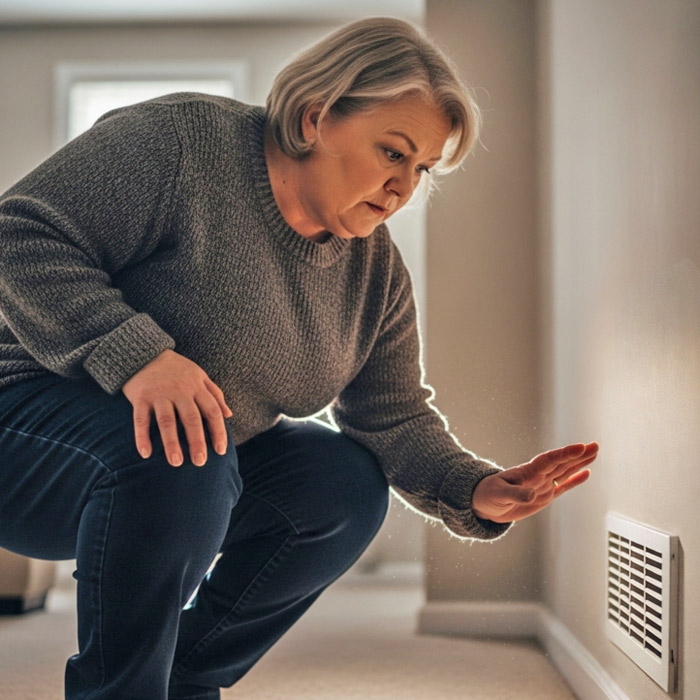
Heating and cooling problems may lead homeowners to believe their furnace or air conditioner has failed. This guide explains common HVAC issues that can mimic equipment breakdown and how HVAC contractors can diagnose and correct them.
Thermostat Miscalibration
Thermostats measure room temperature and signal the HVAC system when heating or cooling is needed. If the internal sensor becomes inaccurate, the thermostat may report the wrong temperature. This error can cause the system to run too long or stop too early. The equipment itself may appear unreliable.
An HVAC technician can compare the thermostat reading with a calibrated thermometer. If the numbers differ, the thermostat may need recalibration or replacement.
Thermostat Sensor Placement Problems
The thermostat location affects how the system behaves. If the thermostat sits near a supply vent, sunlight, or a heat source, it may sense a temperature that does not represent the rest of the home. The system then cycles based on inaccurate conditions. Some rooms remain uncomfortable even while the equipment continues running.
An HVAC contractor can check airflow patterns near the thermostat and measure temperatures in nearby areas. Relocating the thermostat to an interior wall can improve system performance.
Thermostat Programming Errors
Many modern thermostats include scheduling features. When the programmed schedule changes temperatures during the day, homeowners sometimes believe the HVAC equipment has become unreliable.
An HVAC technician can review the thermostat schedule during inspection. Adjusting the program settings usually resolves the issue quickly. Once the schedule matches the household routine, the heating or cooling system responds predictably again.
Shorted Thermostat Wires
Thermostats connect to HVAC equipment through low-voltage wiring. Over time these wires can become damaged or shorted. When wires touch or insulation wears away, the system may start unexpectedly or fail to respond to thermostat signals. An HVAC technician can test wiring continuity and inspect connections at the thermostat and control board. Repairing the wiring restores communication between the thermostat and the equipment.
Blocked Air Vents
Return air vents pull indoor air back toward the HVAC system. This airflow allows the equipment to circulate conditioned air throughout the house. Furniture, rugs, or storage boxes sometimes block these vents. When airflow becomes restricted, the system struggles to move air through the duct network. Rooms may receive uneven heating or cooling. The system may run longer due to poor air circulation.
Supply vents distribute heated or cooled air into rooms. Curtains, furniture, or decorative covers can block these vents. Blocked vents reduce airflow into the room. Temperature differences appear between areas of the home.
During a service visit, the HVAC technician can inspect vents and airflow paths. Clearing the obstruction can restore proper air movement.
Dirty or Blocked Air Filters
Air filters collect dust and debris that move through the return air system. Over time the filter becomes loaded with particles and restricts airflow. When airflow drops, the heating or cooling system struggles to move air through the ducts. Rooms may feel uncomfortable. Air from vents may seem weak, and the system may run longer than usual.
An HVAC technician may check the filter first during a service call. Replacing the filter restores airflow quickly. Once air moves freely again, the system often returns to normal operation.
Dirty Blower Wheel
Inside the air handler sits the blower wheel, which moves air through the system. Dust can accumulate on the curved blades of the blower. This buildup reduces the fan's ability to push air through the ducts. Airflow becomes weak even when the motor continues running.
An HVAC contractor can inspect the blower compartment and measure airflow during a service visit. Cleaning the blower wheel restores airflow and improves system performance.
Dirty Evaporator Coil
The evaporator coil absorbs heat from indoor air during cooling cycles. Dust and debris can accumulate on the coil surface. When buildup forms on the coil, airflow across the coil becomes restricted. Cooling performance drops. The system may run longer to maintain indoor temperature. An HVAC technician can inspect the coil inside the air handler. Cleaning the coil improves heat transfer and airflow.
Dirty Outdoor Condenser Coil
The outdoor condenser coil releases heat from the refrigeration system. Outdoor air must move freely across the coil surface. Leaves, dust, and debris can accumulate on the coil fins. When airflow becomes restricted, heat cannot escape efficiently. This condition causes longer cooling cycles and reduced system performance.
An HVAC contractor can inspect the outdoor unit during maintenance visits. Cleaning the coil allows heat to leave the system more easily.
Clogged Condensate Drain Line
Air conditioning systems remove moisture from indoor air. This moisture drains through a condensate line. When algae or debris blocks the drain line, water backs up inside the air handler. Many systems include a float switch that shuts off the equipment when water rises too high. Homeowners may assume the equipment has failed when the system suddenly stops.
An HVAC technician can clear the drain line and reset the safety switch. Once the drain flows freely, the system resumes operation.
Air Duct Leakage
Air ducts carry heated or cooled air throughout the house. If ducts leak, a portion of the airflow escapes before reaching the rooms. Leaking ducts can cause weak airflow at vents and uneven temperatures between rooms.
Air can also escape where ducts connect to ceiling or floor vents ("duct boots"). Small gaps around these duct boots allow conditioned air to leak into attic or crawl spaces. Homeowners may notice weak airflow from vents.
An HVAC contractor can inspect duct connections. Pressure testing sometimes reveals hidden leaks. Sealing gaps can improve airflow and system efficiency. Once sealed, more air reaches the intended rooms.
Improperly Sized Return Air System
Some homes lack enough return air capacity. Without adequate return airflow, the system struggles to circulate air effectively. Symptoms include noisy airflow, uneven temperatures, and pressure differences between rooms.
An HVAC technician can measure airflow and pressure across the system. Adding additional return ducts or enlarging existing returns can improve circulation.
Pressure Imbalance Between Rooms
Homes sometimes develop pressure differences between rooms when doors remain closed or airflow becomes restricted. These pressure differences affect how air moves through the house. Some rooms may feel stuffy or uncomfortable while others remain comfortable.
An HVAC contractor can measure room pressure levels and inspect airflow paths. Adjustments to duct airflow or return air pathways can restore balance.
Zoning System Conflicts
Zoned HVAC systems divide the house into separate temperature zones. Each zone may contain its own thermostat and motorized dampers. If zone controls conflict or communication fails between thermostats and the control board, airflow may shift unexpectedly.
An HVAC technician can inspect the zone control panel and damper motors. Adjustments to control settings or damper operation can restore proper airflow.
Stuck or Failed Zone Dampers
Dampers inside ductwork regulate airflow to different areas of the house. These dampers open or close based on thermostat signals. A damper that sticks in one position can restrict airflow to an entire zone.
An HVAC contractor can test damper movement during system inspection. Repairing or replacing the damper motor restores airflow to the affected area.
Loose or Corroded Electrical Connections
Electrical connections inside HVAC equipment can loosen or develop corrosion over time. Loose connections may interrupt power flow to motors, relays, or control boards. This can cause intermittent system operation. The equipment may start and stop unpredictably.
During maintenance visits, HVAC technicians can inspect terminals and electrical components. Tightening or cleaning connections can resolve the issue.
Blower Motor Capacitor Failure
Capacitors assist electric motors during startup and operation. When a capacitor weakens, the blower motor may struggle to start. Airflow may stop completely or appear intermittently.
An HVAC contractor can test the capacitor using electrical meters. Replacing a weak capacitor can restore normal blower operation.
Outdoor Fan Motor Problems
The outdoor unit contains a fan that moves air across the condenser coil. If the fan motor slows down or stops, heat cannot leave the refrigeration system efficiently. Cooling performance drops quickly.
An HVAC technician can inspect the fan motor, wiring, and capacitor. Repairing or replacing the motor restores airflow across the condenser.
Refrigerant Metering Device Problems
The metering device regulates refrigerant entering the evaporator coil. If the device becomes restricted or fails, refrigerant flow changes. Cooling output may decrease, and temperatures may fluctuate.
An HVAC contractor can measure refrigerant pressures and temperature differences across the system. If the metering device malfunctions, replacement restores proper refrigerant flow.
Refrigerant Line Insulation Damage
The larger refrigerant line carries cool vapor back to the outdoor unit. Insulation surrounding this line prevents heat from entering the refrigerant. When insulation deteriorates, system efficiency drops slightly, and condensation may form on the pipe. An HVAC technician can inspect refrigerant lines during service visits and replace worn insulation as needed.
Electrical Disconnect or Breaker Issues
Sometimes HVAC equipment appears inactive due to electrical interruptions. A tripped breaker or a disconnect switch near the outdoor unit can interrupt power. An HVAC technician or electrician can inspect electrical panels and disconnect boxes during troubleshooting. Restoring power allows the equipment to operate again.
Building Envelope Air Leakage
Heating and cooling systems depend on a home's insulation and air sealing. If outside air enters through attic openings, window gaps, or poorly sealed walls, indoor temperatures fluctuate quickly. The HVAC system runs longer while attempting to maintain indoor comfort.
An HVAC contractor can inspect insulation levels and air leakage points around the building envelope. Sealing these areas improves comfort and system efficiency.
Heating and cooling problems often appear complex, yet the cause may lie outside the equipment itself. Airflow restrictions, wiring faults, duct leakage, and control issues frequently produce symptoms that resemble equipment failure. A careful inspection by an HVAC professional can identify the real cause and restore proper system performance without unnecessary replacement.