



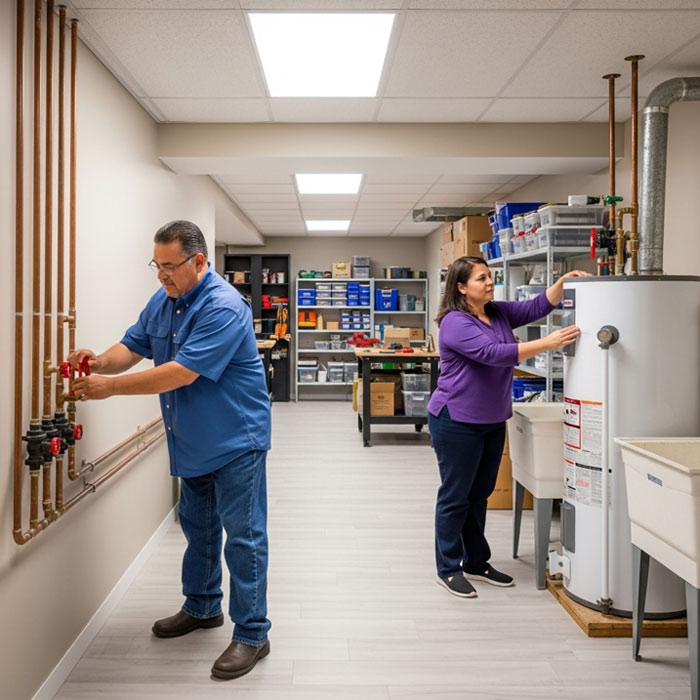
Leaving a home unattended increases the chance of hidden plumbing leaks. This article steps that can reduce risk, limit damage, and help keep water systems stable while away.
Why Plumbing Failures Can Happen While You're Away
A home works best when someone is there to catch small problems early. A slow drip, a loose fitting, or a worn hose may go unnoticed for days when no one is present. What starts as a minor issue can turn into water damage that spreads across floors, walls, and ceilings.
Pressure changes also play a role. Municipal supply lines can shift slightly, and well systems cycle on and off without supervision. Over time, these small variations put stress on connections, valves, and appliances. Older plumbing materials are more likely to fail under these conditions.
Temperature shifts add another layer. Cold snaps can freeze pipes, while warmer months can cause expansion and contraction. Both scenarios increase strain on joints. Without anyone at home to respond, a leak can continue until it becomes severe.
There's also the timing factor. A leak that lasts for hours is very different from one that continues for days. The longer water flows unchecked, the higher the repair costs and the greater the disruption once the homeowner returns.
Main Water Shutoff Strategy
Turning off the main water supply is one of the most direct ways to reduce leak risk. When water isn't flowing through the system, the chance of a sudden failure drops sharply.
The first step is locating the main shutoff valve. In many homes, it's found near where the water line enters the building, often in a basement, utility area, or near the water meter. Testing the valve before leaving is important. A valve that hasn't been used in years may not close fully or could become stuck.
In some situations, a full shutoff isn't practical. Homes with irrigation systems, humidifiers, or certain appliances may require water to remain on. In those cases, partial shutoff becomes useful. Individual valves can isolate specific fixtures, such as washing machines or sinks, while leaving the rest of the system active.
Water Heater Options
Water heaters continue to operate even when no one is home, which adds unnecessary wear and energy use. Most modern units include a "vacation mode" that lowers the temperature to a safe minimum while keeping the system active.
This setting reduces internal pressure and slows down heating cycles. It also lowers the risk tied to high temperatures, such as expansion inside the tank. For short trips, vacation mode is usually the better option since it maintains system stability without a full shutdown.
Longer absences may call for turning the unit off completely. This step removes heating activity entirely, which can reduce stress on components. It also cuts energy use to zero for the duration of the trip.
The decision comes down to trip length and system type. Short trips benefit from reduced operation, while extended time away may justify a full shutdown. Either way, adjusting the water heater before leaving is a key step in lowering overall plumbing risk.
Find out why a hot water heater is more likely to break down during warm weather.
Heat Pump Water Heater Considerations
Heat pump water heaters operate differently from standard electric or gas units. They rely on air movement and produce condensate as part of their normal function. That condensate must drain properly to avoid buildup.
Turning off power to these systems can interrupt internal controls and allow water to sit in the drain line. Stagnant water can lead to minor clogs or slow drainage once the unit is turned back on. Some models may also lose programmed settings when power is cut.
For this reason, it's usually better to leave the unit powered while switching to an energy-saving or vacation setting. This allows the system to manage moisture and maintain basic operation without full heating demand.
Before leaving, it's smart to check the condensate drain line. A quick inspection can confirm that water flows freely and that no blockages are present. This small step helps prevent overflow issues while the home is empty.
Appliance and Fixture Risk Points
Many leaks don't come from main supply lines. They start at smaller connections tied to everyday appliances. Washing machines, dishwashers, and refrigerators with water lines are common sources.
These connections rely on hoses and fittings that wear over time. Even a slight crack or loose coupling can release water slowly. Over several days, that slow leak can spread beyond the immediate area.
To reduce risk, it's useful to shut off supply valves to appliances that won't be used. Washing machines are a prime example. Closing the valves removes pressure from the hoses, which lowers the chance of failure.
Toilets and sinks also deserve attention. Supply lines behind these fixtures can develop small leaks that aren't always visible. A quick inspection for moisture, corrosion, or mineral buildup helps catch early warning signs.
Water filtration systems and ice makers should be checked as well. Their housings and connections can loosen over time. Tightening fittings and looking for signs of wear helps keep these systems stable.
Inspect and Reinforce Vulnerable Areas
A visual inspection before leaving can prevent many problems. Focus on areas where plumbing connections are exposed or where water is used frequently.
Under sinks is a good starting point. Look for damp surfaces, discoloration, or residue around fittings. These signs can point to slow leaks that need attention.
Basements and crawlspaces are also important. Pipes in these areas may be older or exposed to temperature swings. Checking for rust, scaling, or small drips can reveal issues that might worsen during an absence.
Hoses deserve special attention. Rubber hoses, especially those connected to washing machines, can weaken over time. Replacing them with braided stainless steel lines provides a stronger and more durable option.
Water heaters and expansion tanks should also be checked. Look for pooling water, corrosion, or unusual marks around connections. Addressing these signs before leaving reduces the chance of a sudden leak.
Water Pressure and System Stress
Water pressure plays a direct role in how plumbing systems perform. When pressure is too high, it places extra strain on pipes, valves, and fittings. Over time, that strain increases the likelihood of leaks.
A pressure reducing valve, or PRV, helps regulate incoming pressure. Homes without one may experience higher fluctuations, especially in areas with variable supply conditions. If pressure is already high, leaving the system active during a vacation can increase risk.
Checking pressure levels before leaving is a useful step. A gauge can provide a quick reading. Residential systems typically perform best within a moderate pressure range, where components aren't under constant stress.
Stability is just as important as the pressure level itself. Sudden changes can weaken connections, even if the average pressure seems acceptable. Keeping pressure controlled helps maintain system integrity while the home is unoccupied.
Smart Leak Detection and Automatic Shutoff
Technology can add another layer of protection. Smart leak detection systems monitor water flow and detect unusual activity. When a leak is detected, some systems can shut off the main supply automatically.
These systems are installed at the main line or at specific high-risk areas. They track patterns in water use and alert the homeowner if something changes. Alerts can be sent through a mobile app, which allows for quick response even when away.
Point sensors are another option. These small devices are placed near appliances, under sinks, or near water heaters. When they detect moisture, they trigger an alert. While they don't shut off water on their own, they provide early warning.
Combining detection with automatic shutoff offers a higher level of protection. It limits how long water can flow during a leak, which helps reduce damage.
Sump Pump, Drainage, and Moisture Control
Homes with basements rely on sump pumps to manage groundwater. If the pump fails while no one is home, water can accumulate quickly.
Testing the sump pump before leaving is a simple but important step. Pouring water into the pit can confirm that the pump activates and drains properly. It's also worth checking the discharge line to make sure it's clear.
Backup power adds another layer of protection. Battery backup systems allow the pump to operate during power outages. Without backup power, a storm could disable the pump at a critical time.
Condensate drains from HVAC systems and water heaters should also be checked. These lines carry away moisture and can become clogged. Clearing them helps prevent overflow issues.
Seasonal and Outdoor Plumbing Risks
Seasonal conditions can influence how plumbing systems behave.
In colder months, freezing temperatures can cause pipes to expand and crack. Keeping the thermostat set to a safe level helps prevent freezing, even when the home is empty. And consider installing a frost-free hose spigot to help prevent freezing and bursting pipes in general.
Outdoor spigots and irrigation systems also need attention. Water left in exterior lines can freeze and cause damage. Shutting off and draining these lines reduces that risk.
In warmer months, irrigation systems may continue running while no one is home. Adjusting schedules or turning off the system can prevent unnecessary water use and reduce strain on outdoor connections.
Checking hose bibs and exterior fittings for leaks is also worthwhile. These areas are exposed to the elements and can weaken over time.
Final Pre-Vacation Plumbing Checklist
A short checklist helps tie everything together before leaving:
- Turn off the main water supply if practical
- Set the water heater to vacation mode or turn it off for longer trips
- Shut off supply valves to appliances
- Inspect visible pipes, hoses, and connections
- Check water pressure if possible
- Test sump pump and verify drainage
- Clear condensate lines
- Adjust thermostat and outdoor water systems
- Confirm leak detection devices are active
This process doesn't take long but covers the main risk points. It also provides peace of mind once the home is left unattended.
Protecting plumbing during a vacation comes down to preparation and awareness. Small steps taken before leaving can reduce the chance of leaks and limit damage if something goes wrong. A careful review of shutoff options, equipment settings, and vulnerable areas keeps the system stable and reduces stress on components. With the right approach, the home remains in good condition until the owner returns.
Read our related articles on addressing and controlling floods and leaks, preparing for plumbing emergencies, and the consequences of plumbing leaks.