



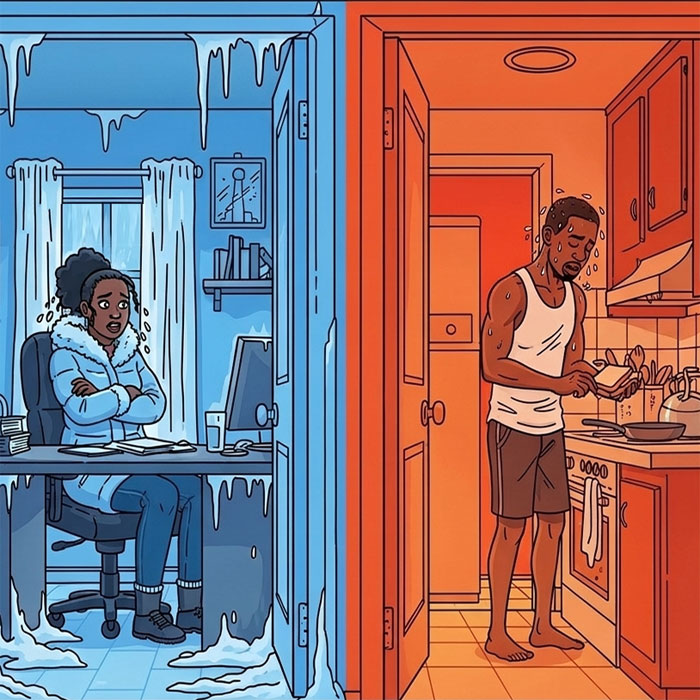
Some rooms stay too hot or too cold due to airflow issues, duct problems, insulation gaps, or system limits. This article explains the causes and outlines practical ways to fix them.
Temperature differences from room to room are common, and they usually trace back to how air moves through the home. Heating and cooling systems are designed to deliver conditioned air evenly, but small imbalances can disrupt that goal.
Each room depends on a steady supply of air and a clear return path. When either side is restricted, the room can fall out of balance. The system may still run as intended, yet certain areas never reach the set temperature.
These issues can feel frustrating because they don't always point to a single cause. A room might stay cold in winter or warm in summer even when the rest of the house feels comfortable. That pattern suggests a distribution problem rather than a failure of the main unit.
Understanding this early helps narrow the focus. The goal isn't just to heat or cool the home. It's to move air correctly so each room receives what it needs.
Airflow Restrictions and Duct Problems
Air must travel through ductwork before it reaches each room. If that path is blocked or limited, airflow drops and comfort suffers.One of the most common problems is damaged ductwork. Flexible ducts can become kinked or crushed, especially in attics or crawlspaces where storage or movement shifts their shape. Even a partial collapse reduces the amount of air that can pass through.
Length and routing also play a role. Long duct runs lose pressure as air travels farther from the main system. If the path includes sharp turns or narrow sections, airflow slows even more. Rooms at the end of these runs may receive less conditioned air.
Undersized ducts add another layer. If the duct diameter is too small for the required airflow, the system struggles to deliver enough air to that room. This isn't always obvious without measurement, but the impact shows up in uneven temperatures.
Disconnected ducts can cause a complete loss of airflow. In that case, conditioned air may be blowing into an attic or crawlspace instead of the room it was meant to serve.
Even when ducts are intact, leaks can reduce how much air reaches each room. Small gaps at joints or seams allow air to escape before it reaches its destination. This lost air doesn't disappear. It ends up in unconditioned areas like attics, basements, or wall cavities. That means the system is working, but the air isn't getting where it's needed. Over time, these leaks reduce overall system performance. Rooms farther from the main trunk line tend to feel the impact more because they rely on consistent airflow to maintain temperature. Sealing ducts can improve delivery without changing the main system. It's a targeted fix that helps restore balance and reduce wasted energy.
If you're getting a new system installed, or your home's ductwork is very old or beyond repair, consider a ductless mini-split HVAC system, which doesn't require ducts.
Static pressure refers to the resistance air faces as it moves through the system. When pressure is too high, airflow drops across the entire network.
High static pressure can come from several sources. Dirty filters, closed vents, or restrictive duct design all contribute. As resistance builds, the system struggles to push air through, and weaker areas receive even less. This imbalance doesn't stay isolated. It spreads across the system, changing how air is distributed. Some rooms may receive too much airflow, while others get very little.
Over time, high pressure can also strain the system. Components work harder than intended, which can lead to wear. Addressing pressure issues helps improve comfort and reduce stress on the equipment.
Every room needs both supply air and a path for that air to return to the system. If one side is limited, circulation breaks down.
Supply vents deliver conditioned air into the room. If a vent is blocked by furniture or placed in a poor location, airflow won't spread evenly. The room may have pockets of warm or cool air instead of consistent coverage.
Return vents pull air back to the system. When returns are undersized, blocked, or missing, air can't circulate properly. This creates pressure differences that interfere with airflow.
Closed interior doors can also trap air inside a room. Without a return path, pressure builds and slows incoming airflow. The system continues running, but the room becomes isolated.
Balancing supply and return is key to maintaining steady temperatures. Both sides must work together for proper circulation.
The layout of a home can influence how air moves between rooms. Multi-story homes are especially prone to uneven temperatures.
Warm air rises, which can lead to upper floors feeling warmer while lower levels stay cooler. Cooling systems may struggle to push enough cold air upward, while heating systems may send more warmth upstairs than needed.
Long duct runs to upper floors can add resistance. As air travels farther, pressure drops, reducing airflow at the end of the line.
Additions and remodeled areas can also create imbalance. If the original system wasn't adjusted to account for new rooms, those areas may receive limited airflow.
Open layouts and closed-off rooms behave differently as well. Air moves freely in open areas but can become restricted in isolated rooms.
Insulation, Windows, and Room Heat Gain or Loss
The structure of the home plays a large role in temperature control. Even with proper airflow, a room can struggle if it loses or gains heat too quickly.
Poor insulation allows heat to pass through walls, ceilings, and floors. In winter, heat escapes from the room. In summer, heat enters from outside. This constant exchange makes it harder to maintain a stable temperature.
Windows and doors are common weak points. Gaps around frames allow drafts, and direct sunlight can raise indoor temperatures quickly. Rooms with large windows or strong sun exposure may feel warmer during the day.
Rooms located above garages or unconditioned areas can also feel different. The temperature below influences the room above, which can lead to uneven comfort.
Improving insulation and sealing gaps helps reduce these effects. It supports the HVAC system by keeping conditioned air inside the room.
HVAC System Sizing and Design Limitations
The size and design of the HVAC system set the foundation for how well it can heat or cool a home. If the system isn't matched to the layout, some rooms may struggle.
An oversized system can cycle on and off too quickly. This short cycling limits how evenly air is distributed. Some rooms may never receive enough airflow during these brief cycles. An undersized system may run continuously but still fail to meet demand. In that case, the system can't keep up, and weaker areas fall behind. Read about the importance of proper sizing for heating systems and factors to consider.
Duct design also matters. If the layout doesn't distribute air evenly, certain rooms may be underserved from the start. Additions or changes to the home can make this more noticeable.
Single-zone systems control the entire home from one thermostat. This setup assumes all rooms behave the same, which isn't always true. Without zoning, adjustments affect the whole house, not individual rooms.
Thermostat Placement and Control Issues
The thermostat controls when the system turns on and off. Its location can influence how the system responds.
If the thermostat is placed in a central or well-conditioned area, it may not represent other parts of the house. Rooms that differ from that location may feel too warm or too cool. This issue becomes more noticeable in homes with uneven layouts. A thermostat near a return vent or in direct sunlight can send inaccurate signals to the system.
Without zoning for your heating and cooling, the system follows a single reading. That limits how well it can adjust to different conditions in each room.
Improving control can involve relocating the thermostat or adding zoning systems. These changes allow for better regulation based on actual conditions.
Finding the root cause requires proper testing. Visual inspection can reveal obvious issues, but measurements provide a clearer picture. Fixing uneven temperatures involves addressing the specific causes identified during inspection and testing. Some solutions are simple, while others require more involved changes.
- Airflow at each register can be measured to see how much air reaches each room. This helps identify areas with weak delivery. Adding or enlarging return vents can help balance pressure within the system.
- Static pressure testing shows how much resistance exists within the system. High readings point to restrictions that need attention.
- Air balancing involves adjusting dampers within the duct system.
- Duct sealing helps prevent air loss and improves delivery. Repairing or replacing damaged sections restores proper airflow.
- Insulation upgrades reduce heat loss and gain. Sealing gaps around windows and doors also helps stabilize indoor conditions.
- Zoning systems provide better control. These systems divide the home into separate areas, allowing for more precise temperature management.
Uneven room temperatures rarely come from a single issue. They usually stem from a mix of airflow limits, structural factors, and system design. A careful review of ducts, pressure, insulation, and control settings can reveal the cause and guide the fix. With the right adjustments, airflow improves, temperature differences shrink, and the home becomes more consistent from room to room.
Read our related articles on air conditioning problems, home heating problems, why your central air conditioner is not cooling your home sufficiently, and how to tell if your heating system is wasting energy.