



Water Hammer: Causes, Damage, and Solutions
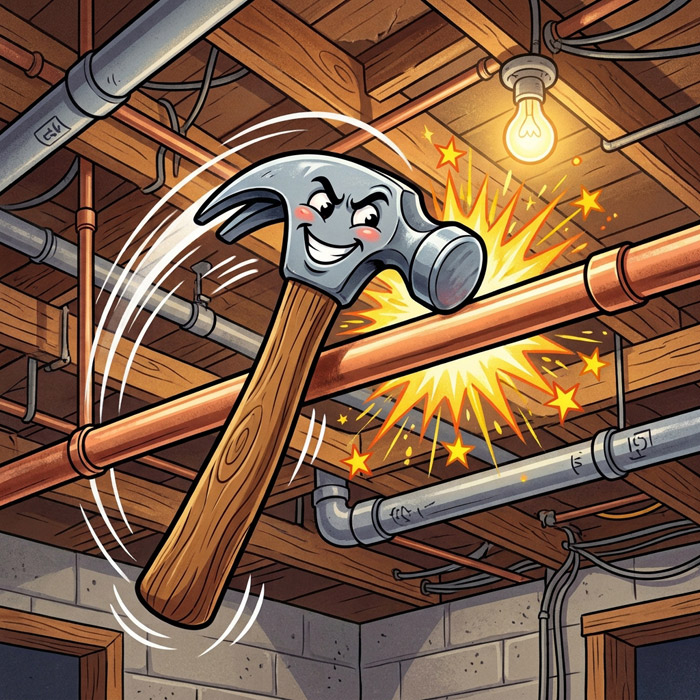
Water hammer can cause loud banging noises, shaking pipes, and plumbing damage. Learn what causes water hammer, how to identify the signs, and solutions that can help.
What Is Water Hammer and What Causes It?
Water hammer is a plumbing problem that occurs when flowing water suddenly stops or changes direction inside a pipe. The sudden interruption produces a pressure surge that travels through the plumbing system, sometimes causing a loud banging or knocking sound. Depending on the force of the surge, pipes may also shake or vibrate. Although the noise can be startling, understanding what causes it can help homeowners determine how serious the problem might be.
Water normally travels through household plumbing at a fairly steady rate when a faucet or appliance is running. When a valve closes quickly, the moving water has to stop almost immediately. That sudden change sends a pressure wave through the water and surrounding pipes. The pressure wave can travel back and forth through the plumbing system, producing the familiar banging sound associated with water hammer.
Several common household conditions can contribute to water hammer, including the following:
Fast-Closing Appliance Valves
Washing machines and dishwashers are among the most common sources of water hammer. These appliances use electrically operated valves that can shut off water almost instantly. When water has been flowing quickly through the supply line, the sudden closure can produce a noticeable pressure surge. Ice makers and certain other appliances with automatic valves can cause similar problems.
Quickly Closing Faucets
Some single-handle faucets and other plumbing fixtures allow water to be shut off very quickly. Depending on the home's plumbing arrangement and water flow, closing these fixtures can cause a pressure surge. The noise may be particularly noticeable when a faucet is used at full flow and then abruptly shut off.
High Water Pressure
Excessive household water pressure can increase the force of water hammer. Higher pressure may allow water to move faster through plumbing fixtures, making sudden changes in flow more severe. However, water hammer can also develop in homes with normal water pressure, particularly when fast-closing valves are involved.
High Water Flow Velocity
Water moving rapidly through pipes carries considerable energy, which must be absorbed when the flow suddenly stops. Certain pipe sizes, plumbing layouts, and high-flow fixtures can increase the likelihood of pressure surges. Even with acceptable household water pressure, excessive flow velocity can contribute to water hammer.
Check Valves and Water Pumps
Check valves prevent water from flowing backward, but certain types can close abruptly and produce pressure surges. Homes with private wells may also develop water hammer when pumps start or stop, especially if check valves or pressure controls aren't operating properly.
Loose Pipes
Loose or poorly supported pipes can make these pressure surges considerably louder. When pipes have enough room to move, the force of water hammer may cause them to strike nearby framing or other plumbing components. The underlying pressure surge and the movement of unsecured pipes can combine to produce particularly loud noises.
How to Recognize the Signs of Water Hammer
The most recognizable sign of water hammer is a sudden banging, thudding, or knocking sound when water stops flowing. The noise may seem to come from behind a wall, beneath a floor, or somewhere near a plumbing fixture. It can resemble a single heavy knock or several rapid bangs as the pressure wave travels through the pipes.
The timing of the noise provides an important clue. Water hammer commonly occurs immediately after a faucet closes or an appliance stops filling with water. For example, a homeowner might hear several bangs during a washing machine cycle as the appliance repeatedly opens and closes its water valves, even though the machine isn't spinning or moving.
Some homeowners also notice physical movement in exposed plumbing pipes. Pipes might briefly jump, shake, or vibrate when a nearby valve closes. In severe cases, the vibration can be felt through a wall or cabinet. These movements may be especially noticeable in basements, utility rooms, and areas where plumbing connections remain visible.
Water hammer can also occur without any noticeable noise, even when pressure surges are strong. Homeowners may have no reason to suspect a problem unless they notice unexplained leaks, recurring valve failures, or visible pipe movement. Without these warning signs, silent water hammer can go undetected, sometimes requiring a professional plumbing contractor to use specialized pressure-monitoring equipment to identify the problem.
Other plumbing noises can sound similar to water hammer, but their sounds and timing can help distinguish them. A professional plumbing inspection may be necessary to determine the exact source of the noise:
- Water hammer: A sudden, sharp bang, thud, or series of knocks, usually immediately after a faucet closes or an appliance stops filling with water.
- Thermal expansion: Ticking, clicking, or light popping sounds as hot water pipes heat up or cool down.
- Loose pipes: Rattling, tapping, or vibrating sounds while water is flowing through the pipes.
- Air in pipes: Gurgling, sputtering, or irregular knocking sounds, sometimes accompanied by uneven water flow.
- Faulty valves: Humming, chattering, or rattling noises while a fixture or appliance is operating.
The location of the sound isn't always the location of the cause. Pressure waves can travel considerable distances through connected plumbing, making a bang near one wall originate from a valve elsewhere in the house. If the source remains unclear, a plumber can evaluate the plumbing layout, operating pressure, valves, and other components.
What Problems Can Water Hammer Cause?
An occasional mild pressure surge may cause little concern, but repeated or severe water hammer can place unnecessary stress on household plumbing. The pressure created when moving water suddenly stops can temporarily exceed normal operating pressure. Over time, repeated surges may weaken vulnerable connections or contribute to damage in plumbing components.
Pipe Joints and Fittings
These are particularly vulnerable when repeated pressure surges place strain on connections. Soldered joints, threaded fittings, and other connections can be subjected to forces they weren't intended to withstand repeatedly. Older plumbing systems, especially those with weakened connections or existing corrosion, may be more susceptible to damage.
Another concern involves pipes moving against surrounding building materials. When pipes repeatedly strike wooden framing, brackets, or other nearby surfaces, the movement may gradually loosen supports or damage pipe connections. Even when the pressure surge itself isn't unusually severe, continuous pipe movement can contribute to wear.
Leaks
Water hammer can also contribute to leaks. A connection that has gradually loosened or weakened may eventually allow water to escape, sometimes in an area where the leak isn't immediately visible. Small leaks behind walls or beneath flooring can remain unnoticed until dampness, staining, or other signs of moisture become apparent. If a leak continues unnoticed, homeowners may eventually face damaged drywall, flooring, insulation, or mold growth.
In more severe situations, strong pressure surges can contribute to cracked pipes or failed connections. Although a burst pipe isn't the usual outcome of occasional water hammer, repeated stress can increase the risk of failure in plumbing that's already vulnerable. A sudden pipe failure can release substantial amounts of water before the supply is shut off.
Plumbing Fixtures and Appliances
Plumbing fixtures and household appliances can also suffer damage. Valves, seals, flexible supply hoses, and internal appliance components may be exposed to repeated pressure changes. Washing machines, dishwashers, and other water-connected appliances can develop leaks or valve problems when their plumbing connections are subjected to excessive stress.
Water hammer doesn't automatically mean that plumbing damage is occurring. The severity depends on several factors, including the strength and frequency of the pressure surges and the condition of the plumbing. However, persistent or increasingly forceful banging deserves attention before a weakened component develops into a costly repair.
How to Find the Source of Water Hammer
Finding the source of water hammer usually begins with identifying the circumstances that trigger the noise. Since water hammer generally happens when water flow changes suddenly, observing which fixtures or appliances are operating can help narrow down the possibilities.
Checking Faucets
A homeowner can begin by checking faucets individually. Running cold water and then shutting it off can reveal if a particular fixture produces the banging. Repeating the check with hot water may help determine which supply line is involved. These observations can be useful when the sound seems to originate somewhere away from the fixture being used.
Appliances may require closer attention because their valves operate automatically. A washing machine might produce a loud bang during its filling cycle, while a dishwasher may trigger the noise at several points during operation. Identifying the specific appliance associated with the sound can help a plumber locate the source of the pressure surge.
Exposed Pipes
Exposed plumbing can provide additional clues. Pipes in basements, utility rooms, and beneath sinks can sometimes be observed while someone operates a nearby faucet. Visible shaking or movement may indicate inadequate support or help identify the section of plumbing carrying the pressure wave. Homeowners should avoid handling moving pipes while the water is running.
Household Water Pressure
Household water pressure is another factor worth checking. A pressure gauge attached to an outdoor faucet or compatible hose connection can provide a reading of the home's static water pressure when no water is being used. In many residential plumbing systems, static pressure above 80 pounds per square inch (PSI) exceeds the limit specified by commonly adopted plumbing codes.
For homes with pressure regulators, an unusually high reading may indicate that the regulator needs adjustment or repair. Pressure readings can also change throughout the day, so a single measurement may not reveal every pressure problem.
How to Stop Water Hammer
Stopping water hammer depends on identifying the condition responsible for the pressure surge. Some problems can be corrected with relatively minor plumbing adjustments, while others require additional components or changes to the water supply system. The most suitable repair depends on the source and severity of the problem.
Correcting Excessive Water Pressure
When household water pressure is too high, reducing it may help lessen the force of water hammer. Many homes have a pressure-reducing valve, also called a pressure regulator, installed near the main water supply line. This device controls the pressure entering the household plumbing.
A plumber can check the regulator and adjust it when necessary. If the valve is worn or malfunctioning, replacement may be needed. Lowering excessively high water pressure can reduce strain throughout the plumbing system, although a separate correction may still be necessary when fast-closing valves are causing pressure surges.
Securing Loose Plumbing Pipes
Pipes that move or strike nearby surfaces may need additional support. Properly installed clamps, brackets, and other pipe supports help hold plumbing lines securely and reduce movement during sudden pressure changes.
Some pipes may also benefit from cushioning where they pass through framing or contact surrounding materials. The appropriate supports depend on the pipe material, location, and amount of movement. Securing pipes can reduce banging noises and mechanical stress, although it doesn't eliminate the pressure surge that causes water hammer.
Repairing or Replacing Problematic Valves
Certain valves can contribute to water hammer because they close too abruptly or aren't operating correctly. Depending on the situation, repairing or replacing a valve may help reduce sudden changes in water flow.
Plumbing systems with pumps or check valves may require adjustments to valve selection, pump controls, or related components. These repairs are particularly important in homes with private wells, where water pressure and flow are controlled by equipment that differs from a typical municipal water supply.
Installing Water Hammer Arrestors
Water hammer arrestors are devices designed to absorb sudden pressure surges inside plumbing pipes. They contain a sealed cushion of gas, usually separated from the water by a piston or flexible diaphragm. When a pressure wave reaches the arrestor, the gas compresses and absorbs some of the force.
Arrestors are commonly installed near washing machines, dishwashers, and other fixtures with fast-closing valves. Some models connect directly to washing machine supply hoses, while others are installed within the plumbing lines. Proper placement and sizing are important because the arrestor needs to be positioned where it can effectively absorb the pressure surge.
Modern mechanical arrestors are generally more dependable than older air chambers, which are short vertical sections of pipe once commonly used to cushion pressure changes. Traditional air chambers can gradually fill with water and lose their ability to absorb pressure surges.
Water hammer arrestors can be highly effective when properly selected and installed. However, plumbing systems with excessive pressure, poorly operating valves, or other underlying problems may require additional corrections.
Can Water Hammer Go Away on Its Own?
Water hammer may occasionally disappear or become less noticeable without any repairs. Changes in water usage, supply pressure, or appliance operation can influence the frequency and strength of the noise. A plumbing system might remain quiet for several days before the banging returns under different conditions.
In some older plumbing systems, draining and refilling the pipes may temporarily restore air to traditional air chambers, reducing the noise for a while. However, these chambers can eventually fill with water again, allowing the problem to return.
A temporary improvement doesn't necessarily indicate that the cause has been corrected. When water hammer occurs repeatedly, identifying the source and making the appropriate repairs provides a more dependable solution.
When Should You Call a Professional Plumber?
Water hammer doesn't always require an emergency plumbing visit, especially when the noise is mild and occurs infrequently. However, persistent banging, severe pipe movement, or changes in the intensity of the noise can indicate that a plumbing system needs professional attention.
A plumber should be contacted when banging becomes louder, occurs throughout the house, or begins happening during normal faucet use. These conditions may suggest excessive pressure, loose plumbing, or another problem that needs a closer inspection. Water hammer that continues after simple corrections may also require professional diagnosis.
Visible leaks, damp areas near plumbing connections, or water stains on walls and ceilings deserve prompt attention. If a pipe or connection begins leaking heavily, shutting off the affected water supply can help limit damage until repairs are completed.
A professional plumber can measure household water pressure, inspect exposed plumbing, check valves and regulators, and identify locations where water hammer arrestors may be needed. Depending on the findings, the repairs might involve replacing worn components, securing supply lines, or modifying sections of plumbing.
Professional assistance is especially useful when pipes are concealed behind finished walls or when the problem involves a private well pump, pressure tank, or other water supply equipment. These systems can have several interacting components, making the source of a pressure surge difficult to identify without the appropriate knowledge and equipment.
Homeowners who notice recurring water hammer can benefit from having the problem examined before visible damage appears. Addressing the cause can reduce unnecessary stress on the plumbing and help avoid unexpected leaks or appliance repairs.
How to Prevent Water Hammer From Returning
Once water hammer has been corrected, a few preventive measures can help reduce the likelihood of future problems. Maintaining suitable water pressure, keeping plumbing components in good condition, and paying attention to changes in pipe noises are useful parts of household plumbing care.
Water pressure should remain within the limits appropriate for the home's plumbing system. Homes equipped with pressure regulators can benefit from periodic pressure checks, particularly when faucets begin producing unusually forceful water flow or the pressure seems inconsistent. A regulator that stops controlling pressure properly should be repaired or replaced.
Plumbing supports should also remain secure. During other plumbing repairs or home renovations, exposed supply lines can be checked for loose clamps, excessive movement, or contact with nearby framing. Proper support helps prevent unnecessary pipe vibration as water flows through the system.
When installing new appliances or replacing plumbing valves, choosing suitable components can help limit sudden pressure changes. Washing machines and other appliances with fast-closing valves may benefit from appropriately sized water hammer arrestors, particularly when the existing plumbing has previously developed pressure surges.
Regular attention to plumbing noises can also help homeowners recognize changes early. A new banging sound after an appliance installation, valve replacement, or plumbing repair may indicate that the water flow characteristics have changed. Investigating the cause early can prevent the noise from becoming a recurring problem.
Older plumbing systems deserve particular attention because aging fittings, corroded pipes, and weakened connections may be less able to withstand repeated pressure surges. Keeping these components in good condition can lower the likelihood of leaks and other plumbing failures.
Water hammer can be an irritating household problem, especially when loud bangs interrupt otherwise quiet plumbing operation. Although some pressure surges are relatively minor, repeated or severe water hammer can place added strain on pipes, fittings, valves, and appliances. Recognizing the warning signs and identifying the source can help homeowners take appropriate action before plumbing damage develops. With proper water pressure, secure piping, and suitable water hammer controls, a home's plumbing system can operate more quietly and with less unnecessary stress.