



Should You Repair or Replace an Older Heating System
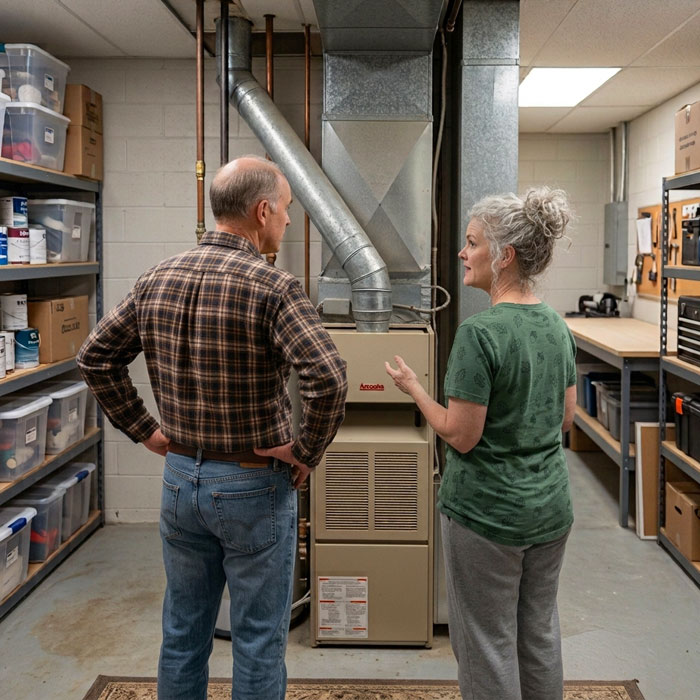
Several factors can help determine whether it makes more financial sense to repair or replace an older heating system. This article explains what to consider before making that decision.
How Old Is the Heating System?
Age is a useful starting point when deciding between heating system repair and replacement because all heating equipment has a limited service life. Furnaces, boilers, heat pumps, electric heating systems, and other whole house heating equipment can last for many years, but their typical lifespans aren't identical.
Many furnaces can operate for roughly 15 to 20 years, while some boilers can remain in service longer. Heat pumps may have a somewhat shorter service life because they can operate during both heating and cooling seasons. Electric resistance heating equipment can sometimes last for decades because it has relatively few moving parts, although controls, wiring, relays, and other components can still wear out.
Age alone doesn't decide when replacement is needed. A 17-year-old system that has been dependable and well maintained may still have useful life left, while another system of the same age may be nearing the point where continued repairs become harder to justify.
As a heating system moves farther into its expected service life, the remaining years become harder to predict. Some systems continue operating well beyond the average lifespan, while others begin having problems sooner. Maintenance history, how heavily the system has been used, and the conditions in which it operates can all influence longevity. Age is most useful as background information that helps put the current repair into perspective.
Knowing the system's age can also help homeowners judge how much money to invest in a repair. A newer system may have many years of service remaining, while an older one may offer less time to recover that expense.
What Is Wrong With the Heating System?
The nature of the current problem is one of the strongest factors in a repair-or-replace decision. Some heating issues involve a single component that can be replaced at a reasonable cost. Others involve expensive parts or damage that can make replacement worth considering.
The specific repair depends heavily on the type of heating system. A furnace may need an ignitor, flame sensor, blower motor, inducer motor, gas valve, or control board. A boiler may need a circulator pump, zone valve, aquastat, pressure control, expansion tank, or another component. A heat pump may need a fan motor, capacitor, reversing valve, compressor, control board, or refrigerant-related repair. Permanently installed electric heating systems may develop problems with thermostats, relays, heating elements, wiring, or controls.
A failed thermostat or relatively inexpensive electrical part usually carries a different financial weight from a failed compressor, damaged heat exchanger, cracked boiler section, or another costly component. The repair price, labor involved, and condition of the surrounding equipment all help put the problem into perspective.
This part of the decision should stay focused on the current failure. The purpose is to understand what went wrong, how serious the issue is, and what it will take to restore normal operation. Energy costs, repair history, and future ownership plans are separate considerations that can be weighed later.
Are There Any Safety Concerns?
Safety deserves separate attention because some heating system issues can pose risks to the occupants of a home. The concerns vary according to the type of equipment and fuel being used.
Fuel-burning furnaces and boilers require proper combustion and venting. Problems involving a heat exchanger, boiler section, burner, flue, chimney connection, gas line, or vent system may interfere with safe operation. Carbon monoxide concerns can arise when combustion gases aren't vented correctly or when damaged equipment allows those gases to enter areas where people live.
Signs such as a gas odor, soot around heating equipment, repeated burner shutdowns, unusual flame behavior, or carbon monoxide alarms call for prompt professional evaluation. The system shouldn't continue running when a technician has identified a serious safety defect.
Electric systems carry different concerns. Damaged wiring, overheated connections, failed breakers, scorched electrical components, or other electrical faults can require immediate attention. Heat pumps and electrically heated systems rely on high-voltage components, so electrical damage shouldn't be treated as a minor inconvenience.
Some safety-related problems can be repaired. Others involve enough damage or expense that replacement may be the stronger option, particularly when the equipment is already old. The decision depends on the defect itself, the availability of suitable parts, and the condition of the remaining system.
What Is the Overall Condition of the Heating System?
A heating system can have one failed component while the rest of the equipment remains in good condition. It can also show broader signs of age that suggest the system is wearing down in several areas.
A heating contractor can look for corrosion, leaks, heat damage, loose connections, worn moving parts, damaged wiring, unusual buildup, and other signs of deterioration. The inspection can also show whether previous repairs have kept the equipment in good shape or if several areas now need attention.
Maintenance history adds useful context. Regular service can help reduce wear and catch smaller issues before they become larger ones. Looking at the system as a whole can show whether the current problem is isolated or part of broader deterioration.
Overall condition can help show how much useful life may remain. A system with one isolated issue may still be worth repairing, while widespread wear can make another major repair harder to justify.
How Reliable Has the Heating System Been?
A heating system's repair history can help show how dependable it has become. One breakdown after many years of steady operation has a different meaning from several service calls during the last two or three heating seasons.
Homeowners can review how frequently the system has needed repairs, which components have failed, and how much has been spent. Repeated problems involving unrelated parts can suggest that age is beginning to catch up with the equipment.
When different issues keep appearing over a relatively short period, the pattern can suggest that the system is becoming less dependable with age. Even if each repair is manageable on its own, repeated service calls can point to a growing likelihood of additional breakdowns.
Frequent breakdowns can make the heating system harder to rely on during cold weather, when contractors may be busy and the house can cool quickly.
A heater that has remained dependable for many years may still be worth repairing after a single failure. But a pattern of repeated service calls tells a different story and can make replacement easier to justify.
Are Replacement Parts Still Available?
Parts availability can become increasingly important as heating equipment gets older. Manufacturers eventually stop producing some components, especially parts designed for models that have been out of production for many years.
Some older heating systems use common motors, relays, valves, thermostats, and controls that remain readily available. Other equipment relies on model-specific parts that may become difficult to locate. Compatible replacement parts may sometimes be available, but that depends on the equipment. A technician can determine if an approved substitute exists and if it can be installed correctly.
Availability can also influence repair time. A part that must be ordered from a limited supplier may leave the home without dependable heat while the component is located and shipped. The price may also be much higher than it was when the equipment was newer.
This doesn't mean an old heating system automatically has a parts problem. Many older units remain serviceable for years. Parts availability simply adds another piece of information when deciding how long continued repairs are likely to remain reasonable.
Is the Heater Still Heating the Home Properly?
A heating system can still run while having trouble maintaining comfortable temperatures. Heating performance deserves its own section because comfort problems don't always mean the same thing as high energy use.
Symptoms can include rooms that stay colder or warmer than others, slow temperature recovery, trouble reaching the thermostat setting, unusually long heating cycles, frequent cycling, or weak airflow from a forced-air system. Hydronic systems may have radiators or baseboards that don't heat properly, while radiant systems can develop areas that remain cooler than they should.
Heat pumps can lose heating capacity for several reasons, including airflow issues, refrigerant issues, outdoor-unit problems, or component wear. Electric heating systems may develop failed heating elements, thermostat issues, or electrical faults that reduce output.
Some comfort problems originate outside the heating equipment. Duct leakage, poor insulation, blocked vents, thermostat location, air leaks, or issues with hydronic piping can produce similar symptoms. A diagnosis should identify the source before the heating unit itself is blamed.
If the system still heats the home steadily and maintains the thermostat setting during normal winter conditions, that supports continued use. If the equipment itself can no longer provide dependable heat, replacement deserves greater consideration.
Cost of Repair vs. Replacement
Once the system's age, current problem, safety, condition, reliability, parts availability, efficiency, and heating performance are understood, the financial comparison becomes much clearer.
The current repair bill is the starting point. A modest repair can make good financial sense when the equipment has been reliable and appears to have years of service remaining. A costly repair on an older system requires closer review, particularly when other components show wear or previous repair bills have been adding up.
Replacement cost can vary widely depending on the type of heating system, the size of the home, installation requirements, and any related work needed to fit the new equipment. The full estimate should include labor and any necessary changes to venting, wiring, piping, ductwork, drainage, or controls.
Possible future repairs belong in the financial comparison as well. No technician can state exactly when another part will fail, but a system with several worn components carries greater uncertainty than equipment in otherwise good condition.
Energy use can also factor into the financial comparison. For furnaces and boilers, the AFUE rating helps show how efficiently the system uses fuel over a heating season. Replacing an older, lower-efficiency system may reduce heating costs, although the savings will depend on energy prices, climate, system use, and the efficiency difference between the old and new equipment.
Length of ownership is especially relevant when replacement would be expensive. Someone planning to move soon may view a major purchase differently from someone expecting to remain in the home for another decade or longer.
The comparison works best when all installation costs are included. New equipment can require venting changes, electrical work, piping modifications, drainage, thermostat changes, duct alterations, or other work depending on the system. Looking at the complete price gives a much clearer picture than comparing the repair bill with the equipment price alone.
Deciding to repair or replace an older heating system requires a broad look at the equipment rather than relying on age alone. Different types of heating systems have different components, service lives, and repair concerns.
There isn’t a single age or repair price that makes replacement the right choice for every heating system. The better decision depends on how much useful life the equipment appears to have left and how much confidence the homeowner has in keeping it in service.
A qualified heating contractor can inspect the equipment, identify the cause of the current problem, explain which parts are showing wear, and provide repair and replacement costs. With that information, the homeowner can make a decision based on the condition of the specific heating system rather than its age alone.